



 Login
LoginMeeting/Event Information
If you are a licensed Professional Geologist in Minnesota, you are responsible for determining if educational content meets the technical requirements for Professional Development Hours (PDHs). General information on continuing education is available on the Minnesota Board of Architecture, Engineering, Land Surveying, Landscape Architecture, Geoscience and Interior Design (MN Board of AELSLAGID) website: https://mn.gov/aelslagid/continuinged.html. The MN Board of AELSLAGID provides an optional Continuing Education Record Checklist: https://mn.gov/aelslagid/forms/cerecord.pdf.
As always, non-members and non-geologists are welcome to attend!
AIPG MN Sept Meeting - Bioremediation 3.0, awkwardly described by a geologist
September 07, 2021
11:45 AM - 1:00 PM
MS Teams - details included in registration receipt & emailed before the meeting
 Add to Calendar
 Directions
Registration for the AIPG MN Section's Tuesday, September 7, 2021 technical talk is now open online!
The cost is $10 for non-members and $5 for members when registering before Tuesday, September 7, 2021 before 9:00 AM Central Time. Students may attend free of charge.
You must register by 9:00 AM Central Time the day of the talk to be sent the login link/information, otherwise check the meeting page or your registration receipt email.
As always, non-members and non-geologists are welcome to attend!
Fees go toward supporting the online meeting platform and the Education Fund. Your contribution to the Education Fund helps support many activities, please see our Giving Back page.
Bioremediation 3.0 (or hydrogeomicrobiochemistry), awkwardly described by a geologist
by Keith Rapp, PG-30574, Pinnacle Engineering
Presentation Overview
Bioremediation employs microorganisms to treat unbelonging chemistries and contaminants through natural biodegradation mechanisms, or by enhancing biodegradation mechanisms through the introduction of microbes, nutrients, electron donors, and/or electron acceptors. Bioremediation technologies represent the most cost-effective and sustainable corrective technologies developed to date, hence its increasing acceptance with the public, regulators, and the regulated community. The global bioremediation market was valued at ~$106B USD in 2019, and forecast to reach $335B USD by 2027. North America represented more than 41% of this market in 2019, and is expected to increase its market share in land-based treatments, mycoremediation [fungal], bioreactors, bioaugmentation, biostimulation, and phytoremediation. The bioremediation industry is extensive, the technologies applied broad and highly varied, and as geologists in the environmental consulting industry we primarily utilize bioremediation dealing with impacted sediments, soil, soil vapor, and surface and groundwater. Understanding the principles of bioremediation will help hone your skills in this burgeoning market.
Early in the 1970s bioremediation technologies and techniques started removing environmental pollutants naturally by indigenous microorganisms, in what was the advent of Bioremediation 1.0. The later transition of bioremediation practices from empirical practices toward knowledgeable design and engineering (including genetic) systems was the dawn of Bioremediation 2.0. This lasted for decades. Now, systemic biology and imaging technologies have advanced our understanding of many of the impediments and obstacles confronted in microbial environments, and has led to the development of reliable methods to identify, measure, and engineer these bioremediation processes into what is becoming Bioremediation 3.0. Bio 3.0 is expanding daily, and relies on supportive specialists in the fields of chemistry, all the ‘omics practitioners in biology, new generations of bioengineers, and field-oriented geologists. New investigative tools are being developed in the field of geology that give high-definition and high-resolution a new meaning. Exciting new principles and opportunities accompany this continued evolution in the bioremediation industry, enhanced and augmented through cooperative interaction of chemistry, biology (micro), geology, soil, sediment, rock, and groundwater contamination. We have turned a corner in our transitional understanding of how these processes work in natural systems, including revolutionary advances in engineering contaminant-destroying microbes in this time of systemic hydrogeomicrobiochemistry.
Essential concepts in Bioremediation 3.0 include establishing robust biofilms, and inducing group behaviors through quorum sensing systems (QSS) . Key to this understanding are implementing new technologies and methods for measuring biofilms, the matrix-enclosed microbial populations adherent to each other and subsurface pore spaces. Microbes are minute, unicellular organisms invisible to the naked eye, and as hydrogeologists we are typically comfortable working in these hidden spaces. It’s within these remarkable biofilm structures that planktonic bacteria and microbes can become sessile, horizontal gene transfer occurs, and new and modified microorganisms evolve naturally, as they have for more than 3.5-billion years. Direct observations demonstrate biofilms develop in every nutrient-sufficient environment on earth, and understanding signal transduction in QSS in biofilms allows microbes the ability to assess and regulate population numbers, of self and non-self, and through integration of different QSS they combine and communicate this information about nutrient availability, population densities, growth rate, community biome, and other environmental factors. Biofilms and QSS are successful in every environment they develop, and this is the remediation mechanism that destroy not only tradition industrial pollutants like petroleum hydrocarbons/oilfield brines, chlorinated solvents, agricultural chemicals, metals, but also the emerging contaminants of concern like PFAS compounds and microplastics.
Biography
Keith Rapp is a professional geologist in multiple states, with more than 35-years of geoscience experience. Keith has been a member of AIPG for more than 2-decades, and served as the Minnesota Section president in 2005 and 2009. He also serves on the Field Trip and Education Committees. Keith started his career in the early 1980s in mineral exploration, then in 1987 thru 1992 in environmental consulting. In late-1992 thru 2013 Keith worked in private industry, and most recently again back in the environmental consulting industry (2013 -present). He serves as an External Advisory Board Member for the University of Minnesota, Twin Cities - Earth & Environmental Sciences Department (2018-2021), the University of Minnesota, Duluth - Earth & Environmental Sciences Department (2021-2024), and as an External Advisory Board Member for the University of St. Thomas – Engineering Department. (2016 - present). Keith is the Professional Geologist Member of the Minnesota Board of Architecture, Engineering, Land Surveying, Landscape Architecture, Geoscience and Interior Design (AELSLAGID), starting in 2015 and will cycle off the Board in 2023.
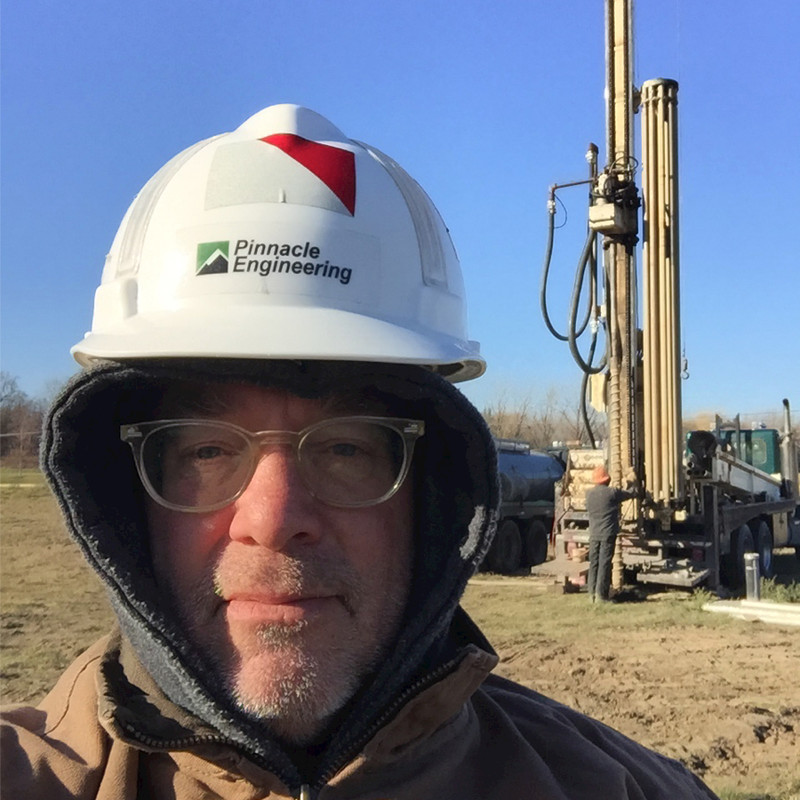
In his spare time Keith served on the Washington County Groundwater Advisory Board, and for more than 20 years as a trail cleaner for the Superior Hiking Trail Association (Cascade River Loop). He enjoys working in the Rapple Orchard in northern Pine Co., and Keith is married to the most patient woman in the World, having two grown children, one a Geological Engineer.
Tickets
$5.00 AIPG MN Section Member Ticket
$10.00 Non-Member Ticket
$0.00 Student Ticket


